
 Ελληνικά
 Deutsch
 Français
 Svenska
 Türkçe
 한국어
한국어 Suomi
Suomi






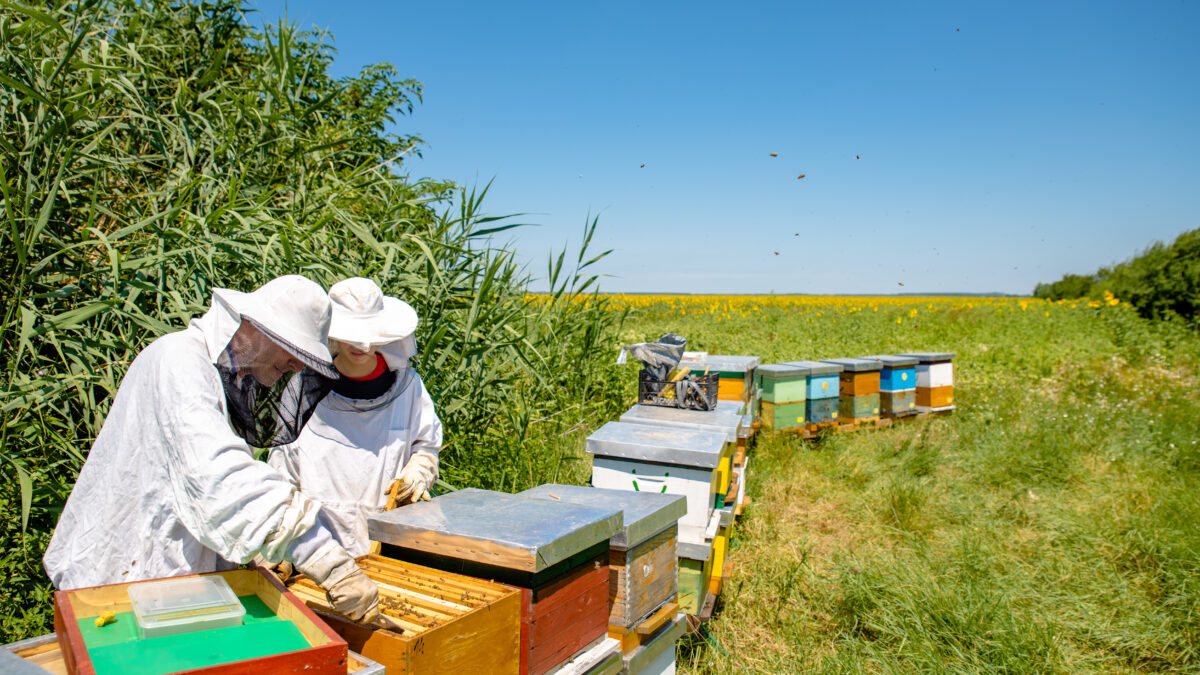
Through innovation, Greek and foreign scientists are ‘reading’ beehives and their products to collect data on pesticides and environmental pollutants like heavy metals found in the air or collected by honeybees and carried back to the hive. Nine countries, including Greece – through the Hellenic Agricultural Organisation DIMITRA – are seeking the best non-invasive method for checking honeybees’ exposure to pesticides.
They used an innovative method to collect data on all the above. Scientists created a palm-sized tablet that is placed in the hive and absorbs substances that the bees have brought into the hive from the environment, enabling the measurement of pesticide levels. For heavy metals, they checked the propolis produced by the bees, and to collect data on the aromatic hydrocarbons, they used silicon rings that are also placed inside the hive.
Additionally, the scientists developed geographical models to identify areas with the highest concentrations of pesticides, heavy metals, and environmental pollutants. They studied agricultural, urban and non-urban areas. With regard to the biodiversity of the plants in the Mediterranean region, the bees collected pollen from more species of plants than in other regions. Moreover, Northern Europe, compared with Southern Europe, has larger percentages of heavy metals, although this has to do not only with industry, which is more extensive in Northern Europe, but also with the soil; in other words, it is a natural phenomenon. In terms of pesticides, significant differences were not found between countries, but it was recorded that there are urban areas with increased percentages of pesticides.
To carry out the above, the researchers used the citizen science research method. That is, citizens – in this case, beekeepers from all over Europe – participated in the programme and agreed to collect samples every two weeks from the materials that had been placed inside their beehives and send them to the research team so that the data could be collected. The citizen scientists, as they are called, always follow a very well-structured protocol that ensures the quality of the results. The science carried out by citizen scientists enables the collection of a much greater volume of data on each issue – data that scientists could not collect without their help.