 Ελληνικά
 Deutsch
 Français
 Svenska
 Türkçe
 한국어
한국어 Suomi
Suomi






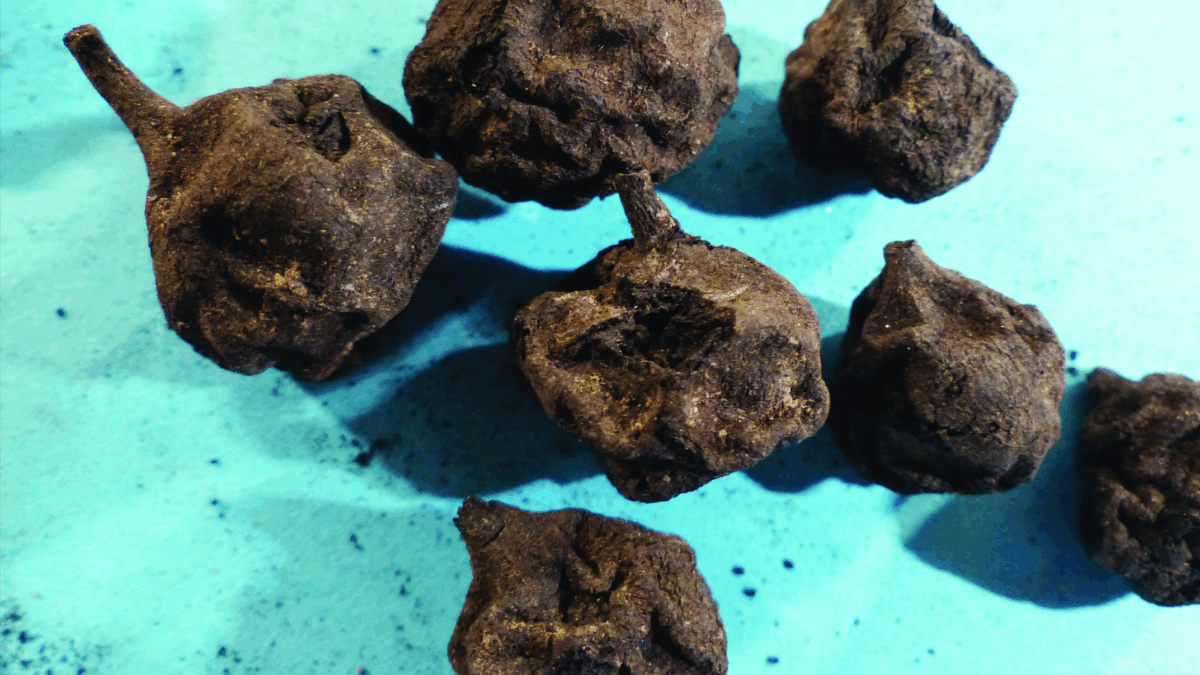
Image 1. Carbonised whole wild pears from the neolithic settlement of Dikili Tash, 4300 B.C. From S.M. Valamoti 2023, Plant Foods of Greece, University of Alabama Press. Photograph: S.M. Valamoti.
Soultana-Maria Valamoti, Professor, School of History and Archaeology, Aristotle University of Thessaloniki
Wild pear trees – gkortzies as they are known in the Greek countryside – are a perennial feature of Greek nature, growing in thickets or in the middle of fields, their ample shade a blessing in the summer and their strikingly aromatic fruit a November treasure. Archaeological remains of wild pears have been discovered in prehistoric sites throughout Greece; perhaps most prominent among these is the neolithic village of Dikili Tash, near ancient Philippi, Kavala. A large vessel filled with wild pears was discovered in a house that burned down around 4300 B.C. The neolithic inhabitants of this house had stored the fruit before it was burned down, enabling the finding to be preserved in the silt.
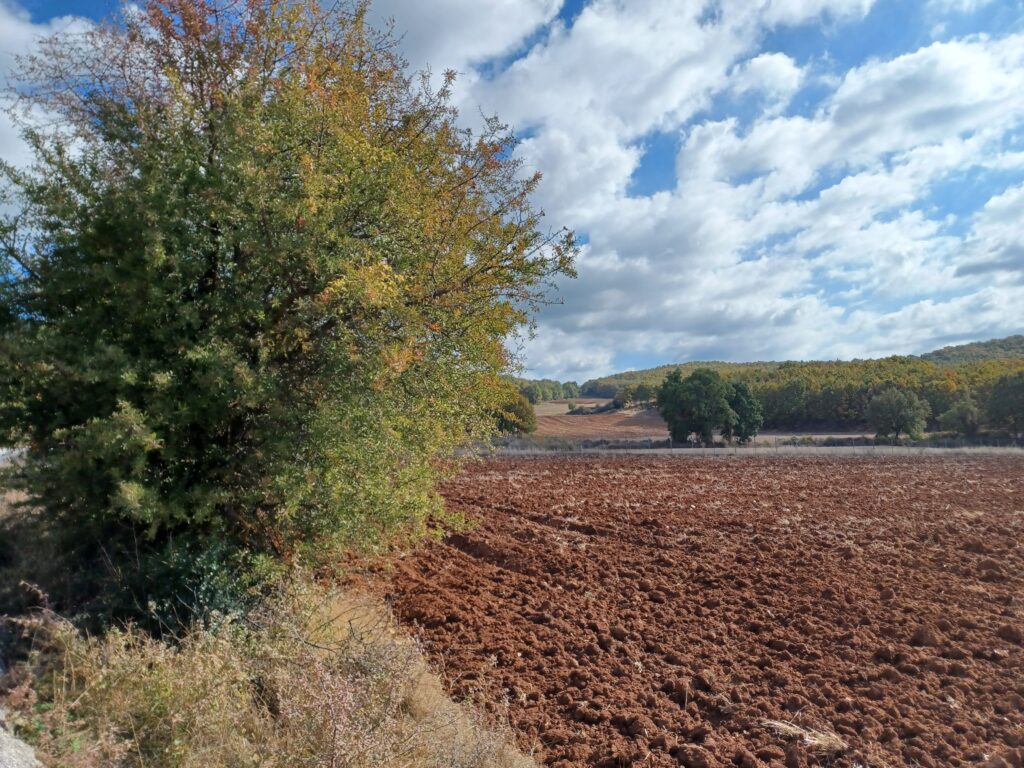
Wild pear tree outside the village of Palaiokastro, Chalkidiki, November 2024. Photograph by S.M. Valamoti
The earliest written testimony on wild pear trees in ancient Greece is found in the Odyssey (8th c. B.C.), under the term άχερδος. The trees were also known by the name αχράς. The 4th-century writer Theophrastus, in his Enquiry into plants, notes the attributes of the tree and discerns between lowland and highland varieties of wild pear, stating that the former produce better fruit and timber. Sophocles (5th c. B.C.) describes it as an impressive tree, full of thorns, while in Oedipus at Colonus he uses it as a landmark. In the Odyssey, Eumaeus the swineherd is described using the thorny branches of the wild pear tree to create an enclosure for his pigs, while Theocritus, writing in the 4th c. B.C., notes that it produces excellent firewood. Aristophanes (5th – 4th c. B.C.) mentions the fruit of the wild pear tree in his Ecclesiazusae, in a joke about the constipation caused by consuming too many of them. References to wild pears after Homer are quite frequent, especially in comic poetry. Beyond Aristophanes’ reference, there is also a vivid description by the elderly protagonist in Menander’s Dyskolos, who, running out of stones to fling with his sling, uses wild pears instead, a demonstration of the fruit’s hardness. According to Theophrastus, wild pears matured in the autumn or winter and were more fragrant than domesticated varieties. A fragment from the comic poet Nicophon (5th – 4th c. B.C.) notes that they were sold by αχραδοπώλες, while elsewhere their attributes are described depending on how they are consumed: ripe, winter pears have laxative properties while when unripe, they are astringent, according to the Hippocratic On diet.
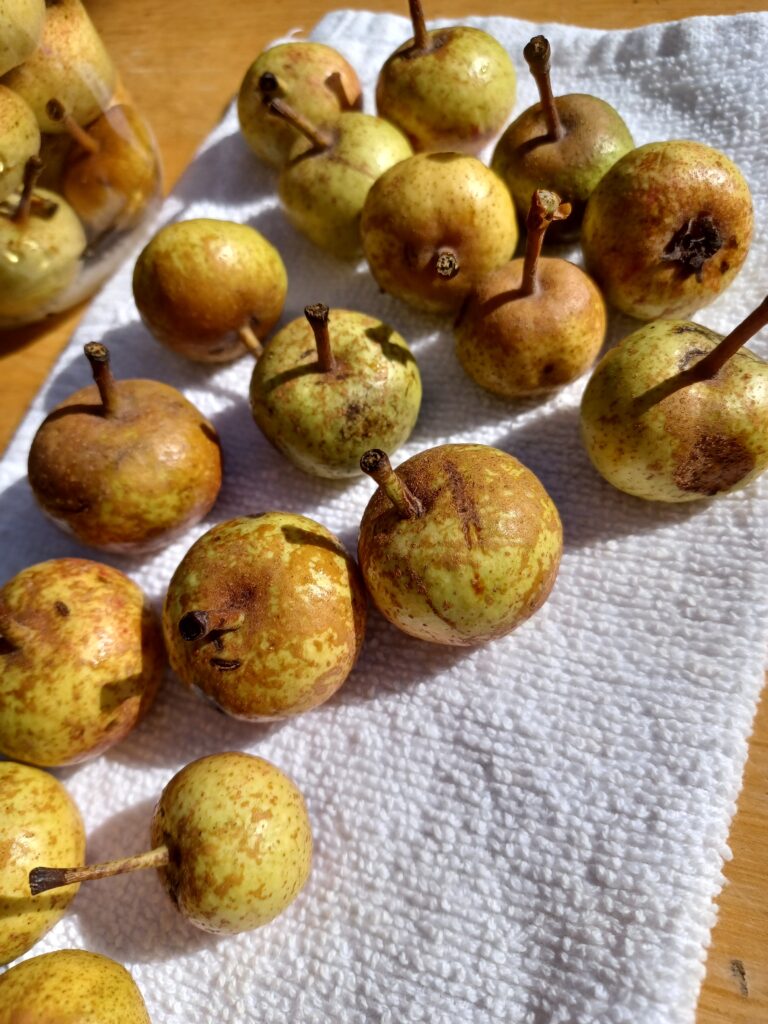
Wild pears collected from a wild pear tree outside the village of Palaiokastro, Chalkidiki, November 2024.
Photograph by S.M. Valamoti
In the modern day, it is somewhat of a rarity to encounter wild pears for sale. Nevertheless, they are known throughout Greece and people in various regions of the country collect and use them. For example, the region of Grevena is known to produce a type of wild pear molasses, though the recipe is in danger of disappearing together with the last generation to learn and experience the fruit’s traditional uses.