 Ελληνικά
 Deutsch
 Français
 Svenska
 Türkçe
 한국어
한국어 Suomi
Suomi






Soultana-Maria Valamoti, Professor, School of History and Archaeology, Aristotle University of Thessaloniki
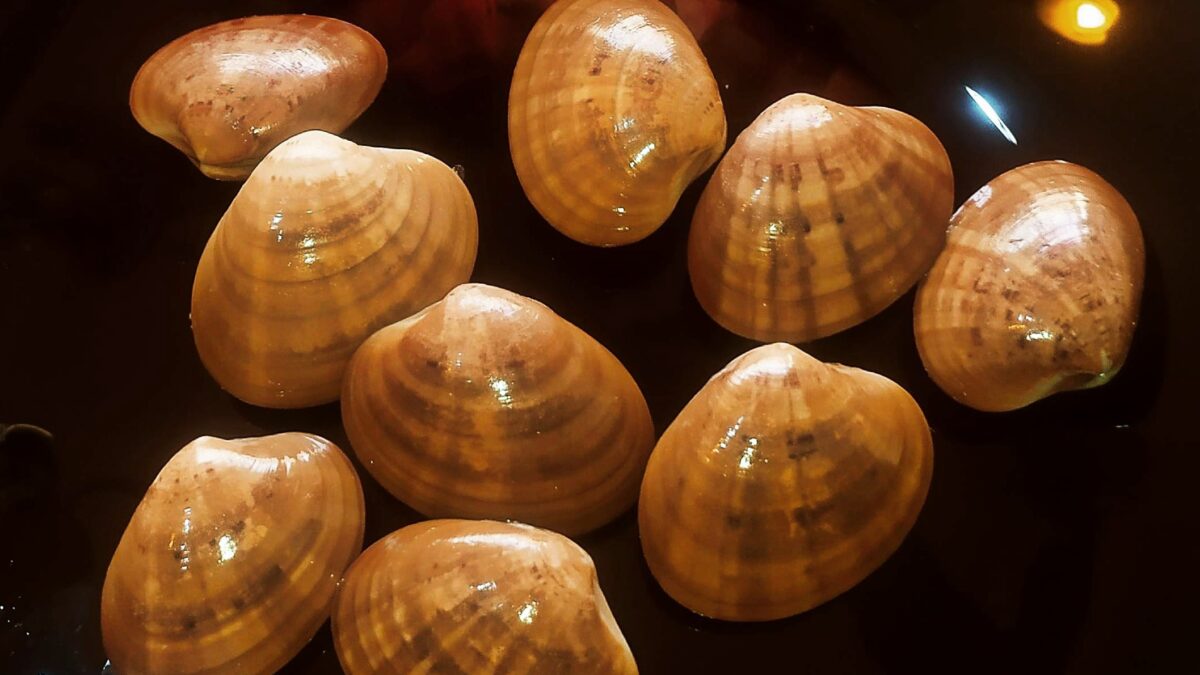
The sea has been central to life in Greece since pre-historic times, with waterways enabling communication, transportation and exchanges of goods and ideas. In addition, the waters are home to a truly stunning variety of edible species. Archaeologists have uncovered remains of fish and mollusks at archaeological sites throughout maritime Greece as well as in some places more inland, proof that the sea was a major source of food for the pre-historic populations living in and around the Aegean. A collection of mollusks including sea snails (Cerithium vulgatum) was found at Franchthi, a Mesolithic site; further findings have also been uncovered from Neolithic times, dating from the 7th millennium BC and later periods. The pre-historic populations of Argolida continued to collect mollusks even after transitioning to agriculture in the Neolithic period. Significant collections of seafood have been found in settlements dating to the Neolithic period (7th – 4th millennia BC), and it appears that both seafood and freshwater fish continued to be consumed throughout the Bronze Age (4th – 2nd millennia BC) and into historical times. Prehistoric sites often contain dense accumulations of marine shellfish collected from the shore, including cockles (Cerastoderma edulis), clams, spiny oysters (Spondylus gaederopus), razor clams, pen shells, scallops, limpets, sea urchins, and others.
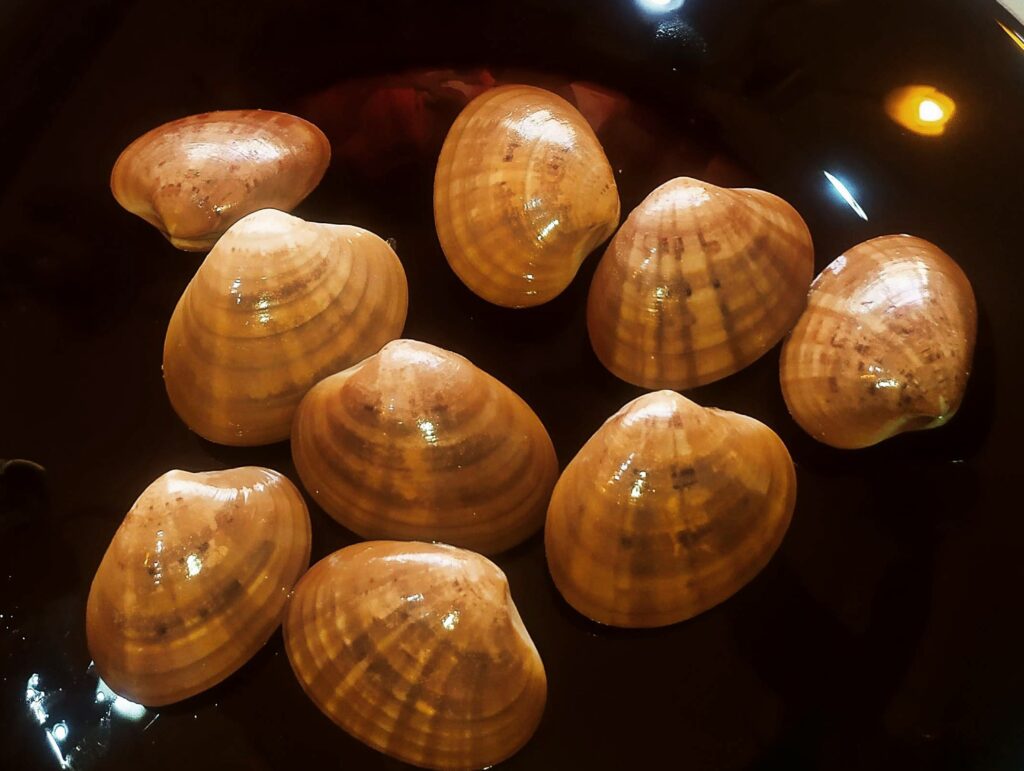
Image 1. Raw razor clams served in a modern Macedonian home, 2021. Photograph: generously granted by Christina Nikopoulou
Archaeological research and special zooarchaeological studies have shown that shellfish were also consumed throughout the historic period in Greece, from the 1st millennium BC onwards. Mollusks that were consumed in the Neolithic and Bronze ages, such as sea snails, limpets, rough pen shells, etc., continued to be harvested later on, as can be seen from archaeological findings at the temple of Poseidon at Kalaureia, Poros.
Beyond the archaeological evidence, the widespread consumption of mollusks in ancient Greece is also confirmed by literary sources. The various species of shellfish were known by a plethora of terms in antiquity. Galen (2nd c. AD), in his On the powers of foods, distinguishes oysters from all other shellfish due to their soft flesh, thanks to which they may be eaten raw, and the fact that while they may not be especially nutritious, they are light on the stomach. On the opposite end, he notes that τὰ σμικρὰ χημία (small clams) καὶ οἱ σωλῆνες καὶ οἱ σφόνδυλοι καὶ αἱ πορφύραι καὶ οἱ κήρυκες (a type of sea snail) have tough flesh, are only edible boiled, and are nutritious but rather heavy on the digestion.
Image 2. Raw razor clams and oysters with lemon, ready for serving, in a modern Macedonian home, 2021. Photograph: generously granted by Christina Nikopoulou
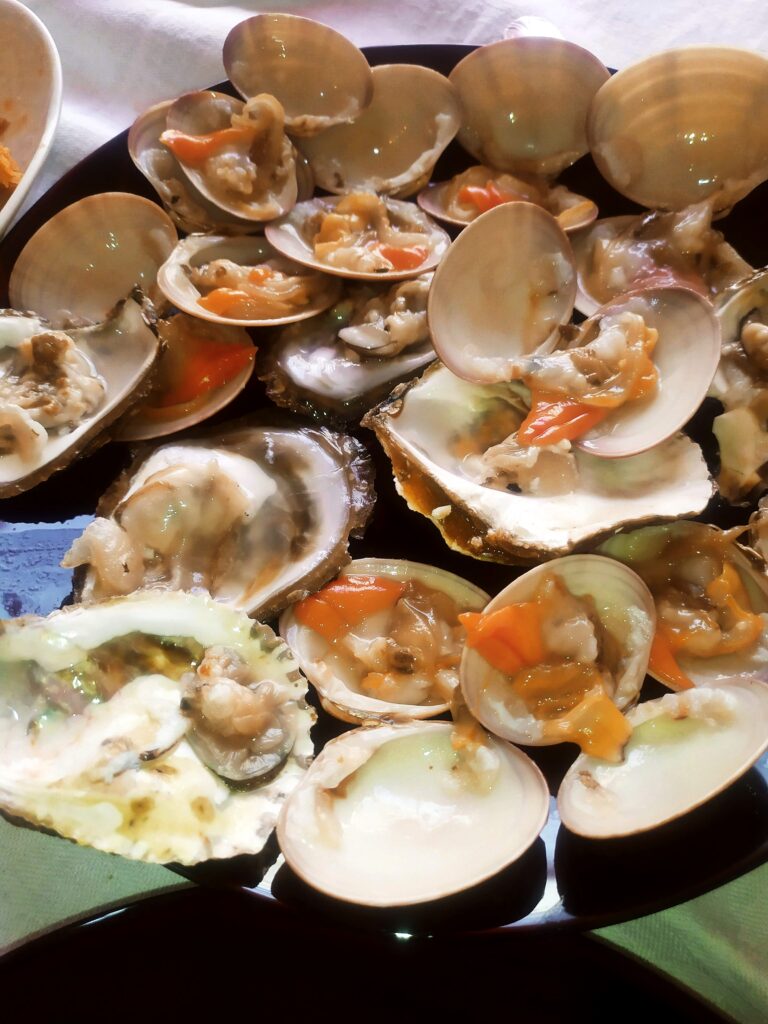
Mollusks have been consumed in Greece for at least 10,000 years, a truly impressive span of time. Some of these, such as rough pen shells, mussels and razor shells, bear the exact same names in Modern Greek and are considered delicacies today. While these shellfish are not always readily available on the market, they are often encountered in cookbooks with local recipes or rare documentations of family recipes, such as rough pen shells with chavara (wild mussels) from Lefkada, limpets ‘plaki’ and kalognomes (a type of clam) with ditalini from Limnos, red-mouthed rock snails and limpets with collard greens or grilled limpets and rock snails from Volos, mussels from Thessaly and Macedonia, especially around the Thermaic Gulf, where they are also harvested in Chalkidiki.
Bibliography
Some of the information above was drawn from the following papers:
Dalby, A.E. W. 1996. Siren Feasts: A History of Food and Gastronomy in Greece
Mylona, Dimitra (2007) Fish-eating in Greece from the fifth century B.C. to the seventh century A.D. : a story of impoverished fisherman or luxurious fish banquets? University of Southampton, Doctoral Thesis.
Βεροπουλίδου Ρένα 2014. Όψεις της διατροφής και του υλικού πολιτισμού της Νεολιθικής και της Εποχής Χαλκού στην κεντρική Μακεδονία. Μια οστρεοαρχαιολογική προσέγγιση (Aspects of Neolithic and Bronze Age diet and material culture in central Macedonia: the evidence from shell analyses). In the volume E. Stefani, N. Merousis, A. Dimoula (eds), A century of research in prehistoric Macedonia. International Conference Proceedings. Archaeological Museum of Thessaloniki, 22-24 November 2012
And
Theodoropoulou, T. (2023). Same sea, different catches. Exploring ecological variations vs. Human choices in prehistoric Mediterranean: The Aegean case. PALEO. Revue d’archéologie préhistorique, (Hors-série), 176-194.