 Ελληνικά
 Deutsch
 Français
 Svenska
 Türkçe
 한국어
한국어 Suomi
Suomi






Soultana-Maria Valamoti, Professor, School of History and Archaeology, Aristotle University of Thessaloniki
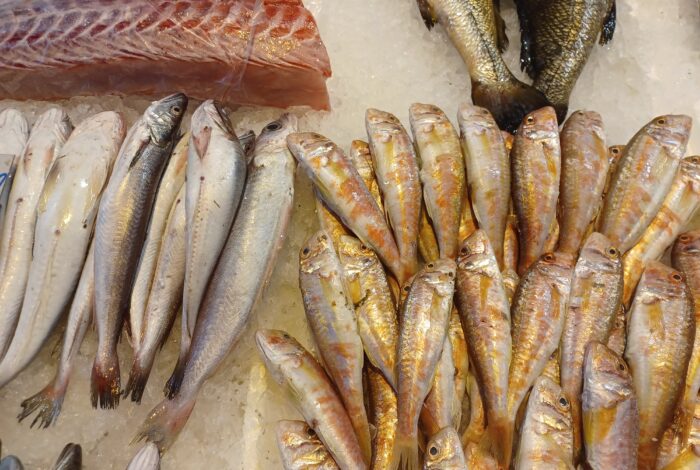
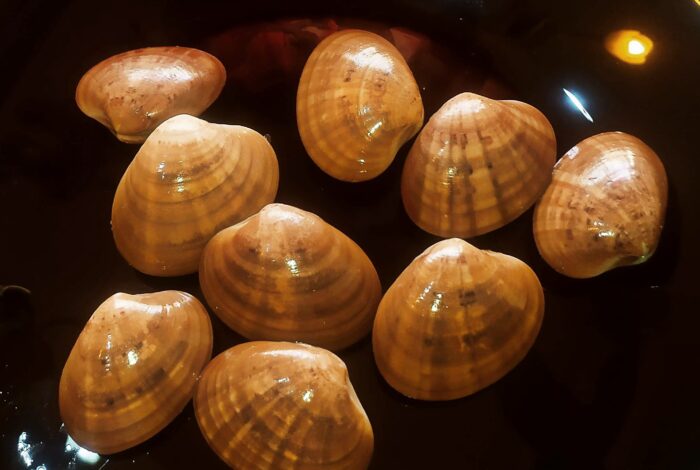
In Mesolithic Greece, long before the advent of agriculture and livestock farming and the subsequent revolution in subsistence, the local populations seem to have been heavily dependent for sustenance on the sea and its abundant variety of fish and shellfish. At archaeological sites such as the Franchthi Cave in Argolis and the Cyclops Cave on Gioura, Alonissos, many remains of tuna bones have been found. In fact, zooarchaeological findings from the latter include a stunning variety of fish beyond tuna, such as scorpionfish, sea bream, sea bass and mackerel. The excavations there also uncovered bone fishhooks dating to the Mesolithic period. Despite their relatively minor imprint in the archaeological record, fish and seafood were major dietary staples of populations living on Greece’s coasts. A wide variety of fish is identified in the zooarchaeological material of the Neolithic (7th–4th millennia BC) and the Bronze Age (4th–2nd millennia BC), as well as in the historical periods that followed, with a great range of catches from both marine and freshwater environments.
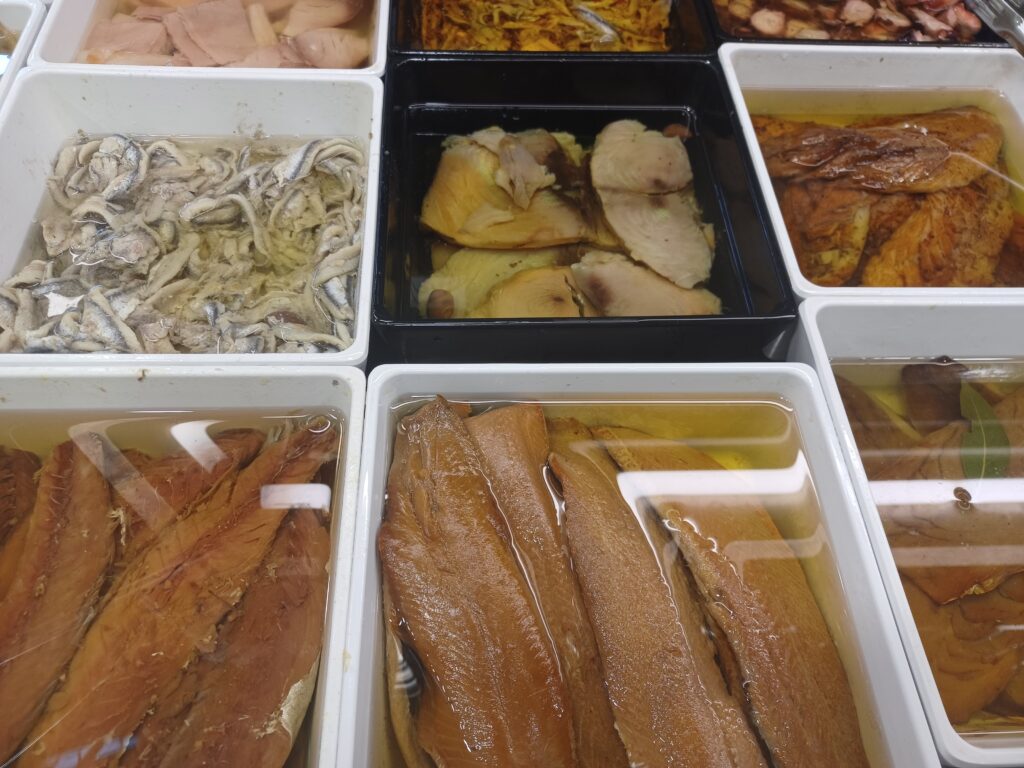
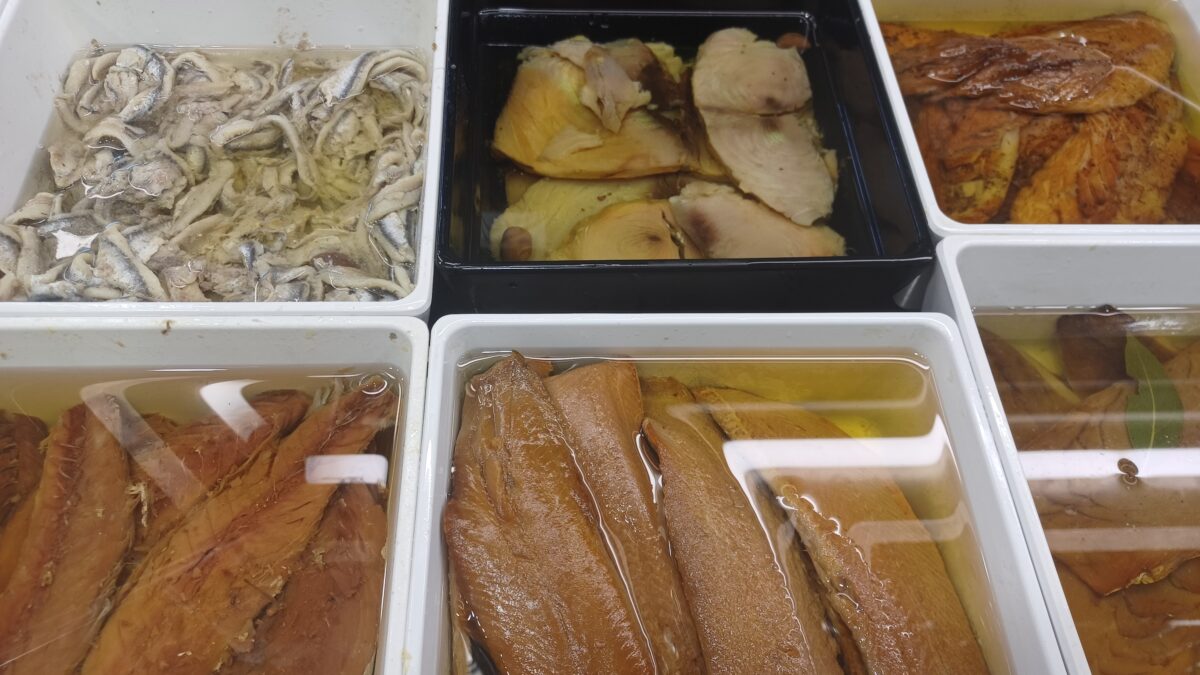
Image 2.1.a. Catches preserved in oil, Thessaloniki 2025. Photograph by S.M. Valamoti
Ancient texts reveal that fish were usually consumed by the higher social classes. This is evident, for example, in the works of the comic poet Alexis (4th–3rd c. BC), as quoted by Athenaeus. In one passage he even remarks that if someone is poor and buys fish, then he must have robbed someone the previous night.
Certain fish were quite popular in antiquity and appear frequently in the ancient texts. Eels are one such example, and they are mentioned as early as the Iliad. Archestratus (4th c. BC) praises all eels as fine food, but singles out those caught in the strait of Rhegion, at Messina in southern Italy, while noting that he also values the eels of Lake Kopais in Boeotia and those of the River Strymon in Macedonia.
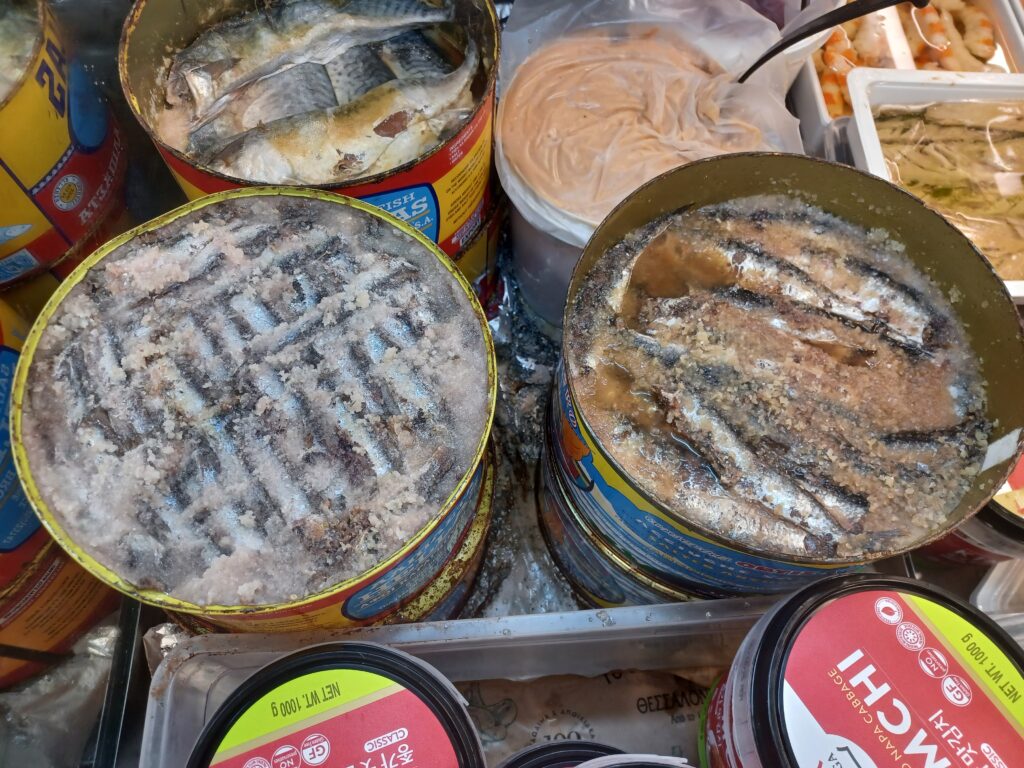
Image 2.1.b. Salted catches, Thessaloniki 2025. Photograph by S.M. Valamoti
Apart from large fish, we also encounter a wide variety of small fish – e.g. atherina, sardine, aphye (a term referring to small surface-dwelling fish) and many others. These small fish, which were abundant in the area of Faliro in Attica, seem to have been cooked briefly over a very strong fire, especially the aphye. References to smaller fish in ancient Greek literature became more frequent from the 5th c. BC onwards.
The most popular means of preserving fish in antiquity was by salting. It appears that salted fish were also imported, as we learn from the comic poet Alexis (4th–3rd c. BC), in a passage preserved by Athenaeus: this trade was so significant that the sons of an importer of such fish were granted Athenian citizenship. Other preservation methods included different forms of salting and smoking.
The great variety of fish in antiquity, the ways they were consumed, and even many of their names, remain alive today – along with the ancient tradition that fish, especially large ones, are a costly delicacy.
Bibliography
Some of the information above was drawn from the following papers:
Dalby, A.E. W. 1996. Siren Feasts: A History of Food and Gastronomy in Greece
Mylona, Dimitra (2007) Fish-eating in Greece from the fifth century BC to the seventh century AD : a story of impoverished fisherman or luxurious fish banquets? University of Southampton, Doctoral Thesis.
Veropoulidou, Rena 2014. Όψεις της διατροφής και του υλικού πολιτισμού της Νεολιθικής και της Εποχής Χαλκού στην κεντρική Μακεδονία. Μια οστρεοαρχαιολογική προσέγγιση (Aspects of Neolithic and Bronze Age diet and material culture in central Macedonia: the evidence from shell analyses). In the volume E. Stefani, N. Merousis, A. Dimoula (eds), A century of research in prehistoric Macedonia. International Conference Proceedings. Archaeological Museum of Thessaloniki, 22-24 November 2012
And
Theodoropoulou, T. (2023). Same sea, different catches. Exploring ecological variations vs. Human choices in prehistoric Mediterranean: The Aegean case. PALEO. Revue d’archéologie préhistorique, (Hors-série), 176-194.