 Ελληνικά
 Deutsch
 Français
 Svenska
 Türkçe
 한국어
한국어 Suomi
Suomi






Soultana-Maria Valamoti, Professor, School of History and Archaeology, Aristotle University of Thessaloniki
While saffron is unlikely to be preserved in archaeological sites, the striking findings from Akrotiri in Santorini show that this plant was gathered by women as early as the 2nd millennium BC. The findings in question include the well-known wall painting depicting two women collecting saffron in a rocky landscape, known as “the Saffron Gatherers.” It was found in a building destroyed by the ash of the Santorini volcanic eruption, an event dated to around 1600 BC. Saffron is also attested in Linear B records from the Mycenaean period (c. 1350–1200 BC) found at Knossos in Crete, which show that the palace oversaw its collection, seeking to increase the quantities that had to be gathered and stored.
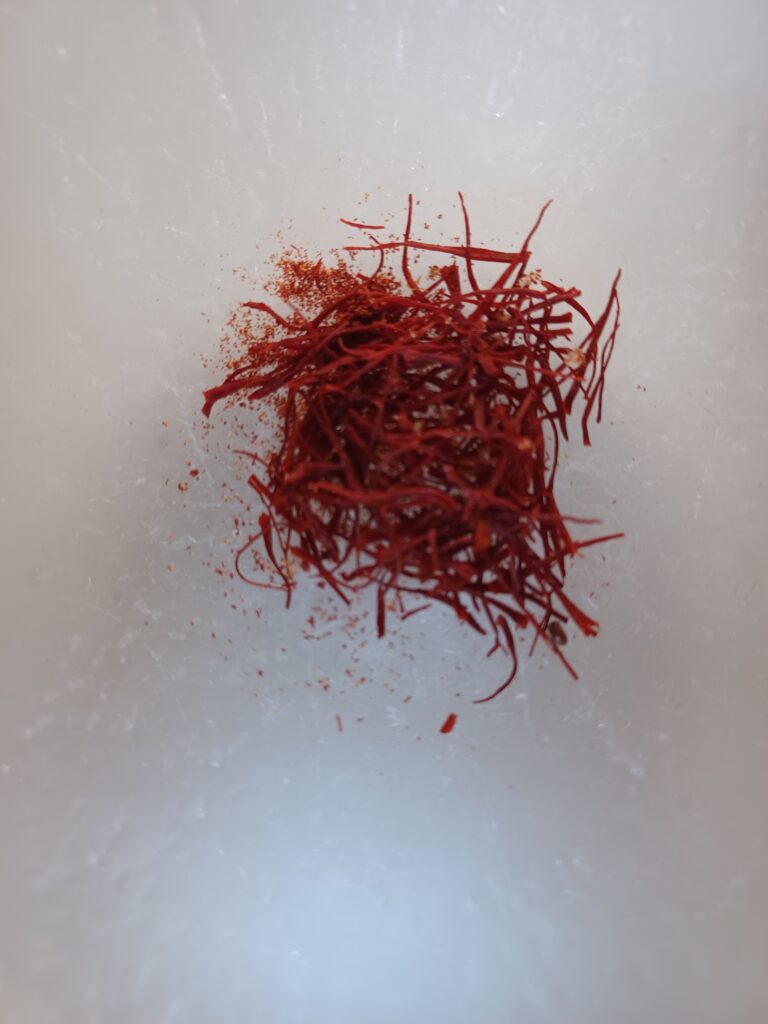
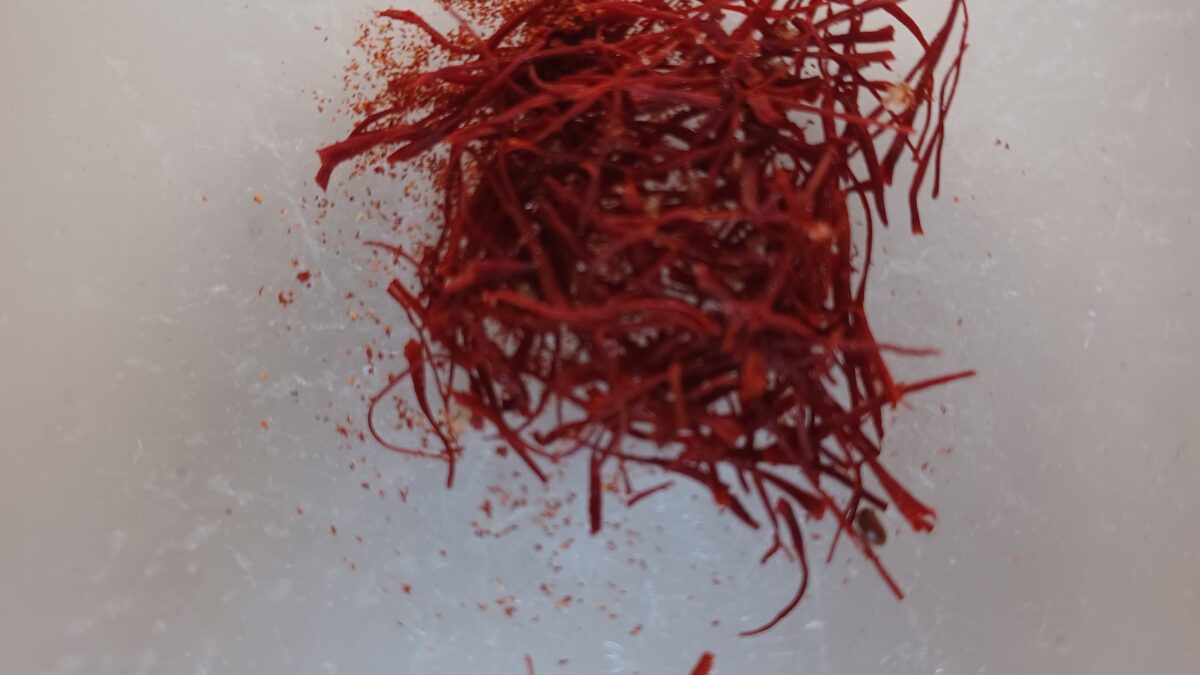
Image 1. Stamens of the saffron plant, Kozani, Western Macedonia. Photograph by S.M. Valamoti
References to saffron are abundant in ancient Greek literature. Already in the Homeric epics of the 8th century BC, the word appears in the compound adjective krokopeplos, used to describe the dawn as wrapped in a vivid yellow veil, vividly conveying the saffron colour of the sky at daybreak. In the Homeric Hymn to Demeter, saffron is one of the many plants Persephone is gathering when she is abducted by Hades.
There are numerous references to saffron’s use as a clothing dye in the ancient Greek literary sources. In a fragment that Athenaeus attributes to the Cypria (8th c. BC) there is mention of garments made and dyed by the Charites and the Horai with colours of spring flowers, including saffron, and in the 6th c. BC, Pindar describes the infant Herakles’ swaddling cloths as krokoton sparganon (Nemean 1.38), evidently because he considers their saffron colour fitting for the hero’s greatness. Similarly, Aeschylus, writing in the same period, has the Chorus in Persians describe the ancient king Darius’ footwear as krokobapton (“saffron-dyed”). In Agamemnon, Iphigenia wears a saffron-dyed robe as Agamemnon leads her to be sacrificed to Artemis. In Aristophanes’ comedies (5th c. BC), saffron is frequently mentioned as an element of women’s adornment – either as the perfume of a coquettish lady (Clouds 51) or, more often, as the colour of their garments. By this time the word krokotos has come to mean “a saffron-dyed garment” (e.g. in Lysistrata: krokotophorousai kai kekallopismenai). In the spirit of mockery and for comic effect, saffron-coloured clothing becomes emblematic in scenes of cross-dressing by men or used to suggest effeminacy (e.g. Thesmophoriazusae 253, 941; Ecclesiazusae 332; and even for the god Dionysos in Frogs 45–46).
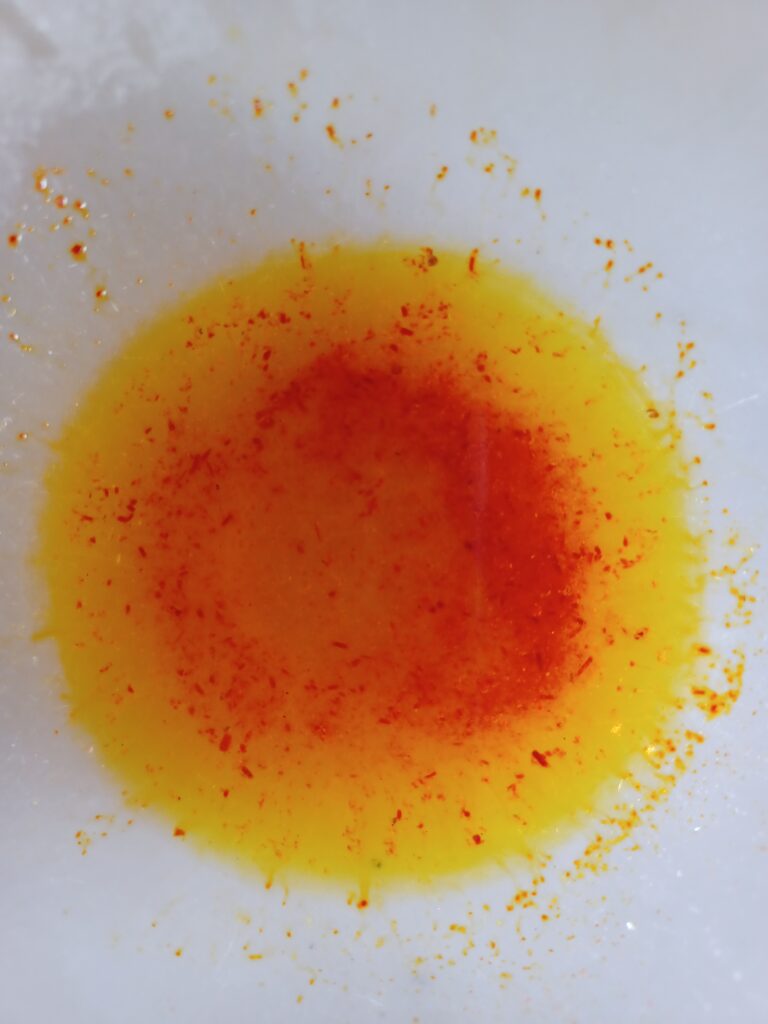
Image 2. Kozani saffron stamens, ground and dissolved in warm water. This is how the aroma and colour of saffron are incorporated into recipes. Photograph by S.M. Valamoti
The use of saffron for therapeutic purposes was also extensive, as shown by the numerous references to it in medical texts as early as Hippocrates (5th c. BC) and in the Hippocratic corpus, where saffron appears in many recipes combined with various other ingredients, often in specific proportions. Saffron is mentioned hundreds of times in the works of later physicians as well, such as Dioscorides (1st c. AD), who also refers to an ointment made from saffron, krokomagma. A century later, Galen also mentions krokomagma, but with the meaning of a medicine containing saffron as an ingredient. Finally, in a much later text of the 6th c. AD by the physician Alexander of Tralles, we find the term krokomelon, referring to a quince-and-saffron syrup.
Today, saffron is a PDO product, systematically cultivated in Kozani, in Western Macedonia. Furthermore, traditional Cycladic cuisine has recipes featuring the indigenous variety of saffron. It is reported that wild saffron was collected from the high ground of Kimolos, and its collection on Santorini – on a small, household scale – is recorded even in recent years. The traditional Christmas breads of Kimolos are made with saffron, specifically with a small amount of water infused for several hours with the dried stamens of the saffron plant. Saffron sees similar use in the Easter breads of Anafi, where the stamens are crushed with a mortar and pestle, dissolved in water, and added to the dough. On Santorini – where the 2nd-millennium BC saffron gatherers were found – we encounter today saffron-based preparations such as small rusks and xerotígana.