
 Ελληνικά
 Deutsch
 Français
 Svenska
 Türkçe
 한국어
한국어 Suomi
Suomi






Soultana-Maria Valamoti, Professor, School of History and Archaeology, Aristotle University of Thessaloniki
Greece and the Hellenic world in general have been closely associated with vineyards and wine since antiquity; according to archaeobotanical findings, grapes and the alcoholic beverage they produce have been produced in the Aegean since the 5th millennium B.C. Another beverage with origins that disappear into prehistoric times is beer, enjoyed alike by peoples of both the Mediterranean and the Middle East, such as the Egyptians and the Sumerians. The widespread view of wine as intrinsic to Greek culture is supported by archaeological findings as well as the literary sources. Wine, together with its patron deity Dionysus, god of the vine, is mentioned in no less early a source than the Mycenaean Linear B tablets. Correspondingly, the Sumerians made frequent references to beer and its ingredients, as well as to their goddess of beer and brewing, Ninkasi.
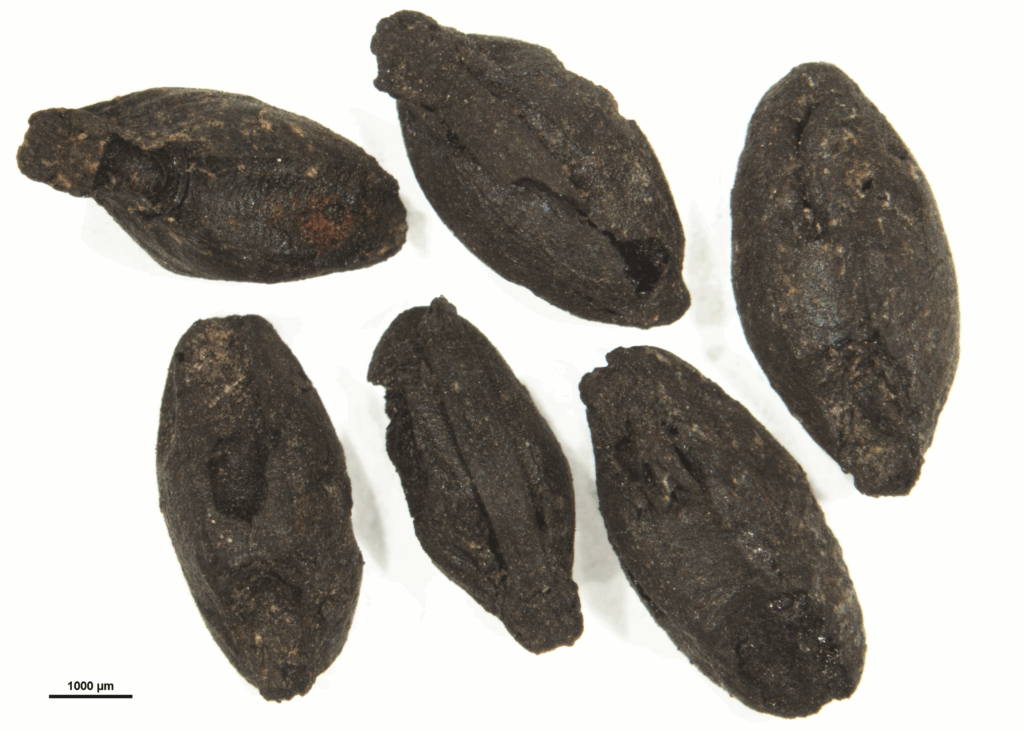
Image 1. Carbonised malt from Argissa, Thessaly, first half of the 2nd millennium B.C. Photograph from Valamoti, S.M. 2023, Plant Foods of Greece: a Culinary Journey to the Neolithic and Bronze Ages. University of Alabama Press.
Given the ancient Greek world’s proximity to peoples who possessed knowledge of beer-making and regularly consumed the beverage, references to beer in ancient Greek literature should come as no surprise. As a result, the Greeks had their own terms for beer, including vrytos and krithinos oinos, the latter meaning wine made from barley. There are references to beer in the ancient historian Xenophon’s Anabasis (5th-4th c. B.C.) as well as in a passage from Aristotle (4th c B.C.), though our main source for ancient Greek references to beer is Athenaeus (2nd-3rd c. B.C.) and his Deipnosophistae. The ancient lyric poet Archilochus notes that the Thracians and the Phrygians consumed beer, while references to the beverage may also be found in the verses of Aeschylus (6th -5th c. B.C.) and Sophocles (5th c. B.C.). The Greek literary sources have associated beer with the Egyptians, as can be seen in the work of Hecataeus of Miletus (6th-5th c. B.C.), who notes that they produced the beverage by crushing barley, and Herodotus (5th c. B.C.), who describes the beer consumed by the Egyptians as a sort of wine made from barley.
There is ample archaeobotanical evidence of grain seeds, the basic ingredient used in beer brewing, in Greece from the 7th millennium onward. However, until recently there were no indications that these seeds were used in the production of beer, and focus was heavily skewed towards wine, which has a wealth of evidence in the archaeobotanical record. This changed in 2018, with the publication of crucial findings from Archontiko in Giannitsa and Argissa in Thessaly: carbonised malt, i.e. germinated grain seeds, the first and main step in the beer-brewing process. These findings date to the first half of the 2nd millennium B.C; together with the special vessels and numerous clay cups with which they were found, they constitute definitive evidence that beer was brewed in Bronze-Age Greece. While findings such as these are few and far between, they nevertheless reveal that Greece had a rather wider array of alcoholic beverages available in its prehistoric past than was believed until recently.
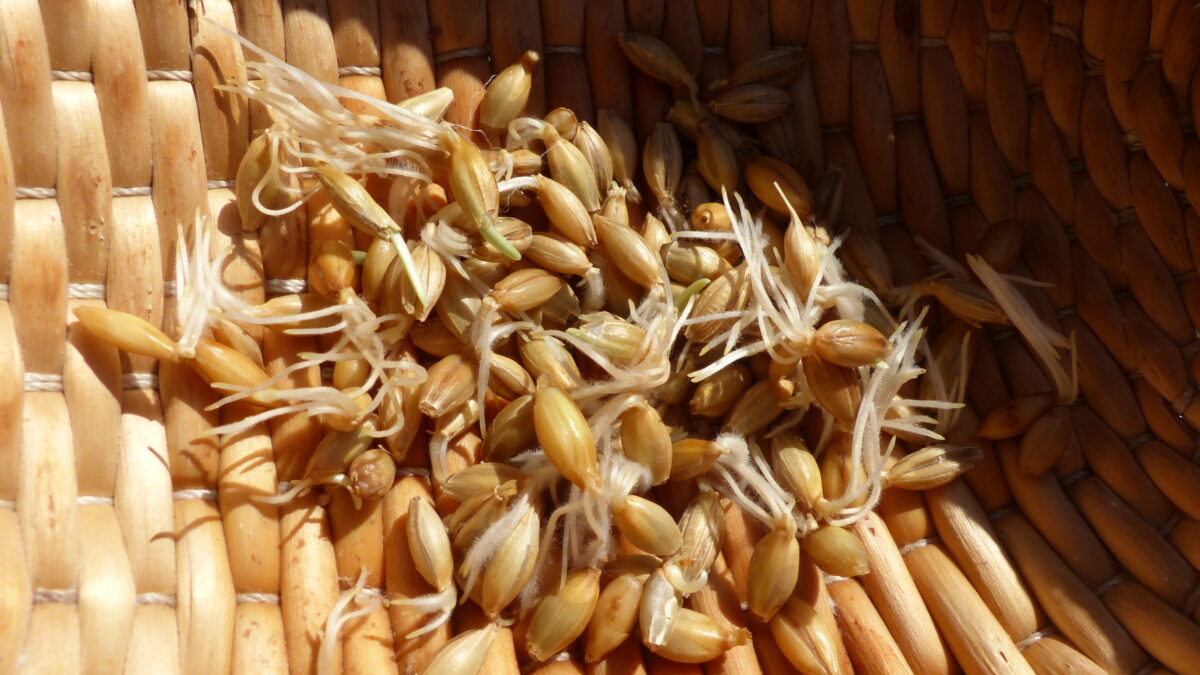
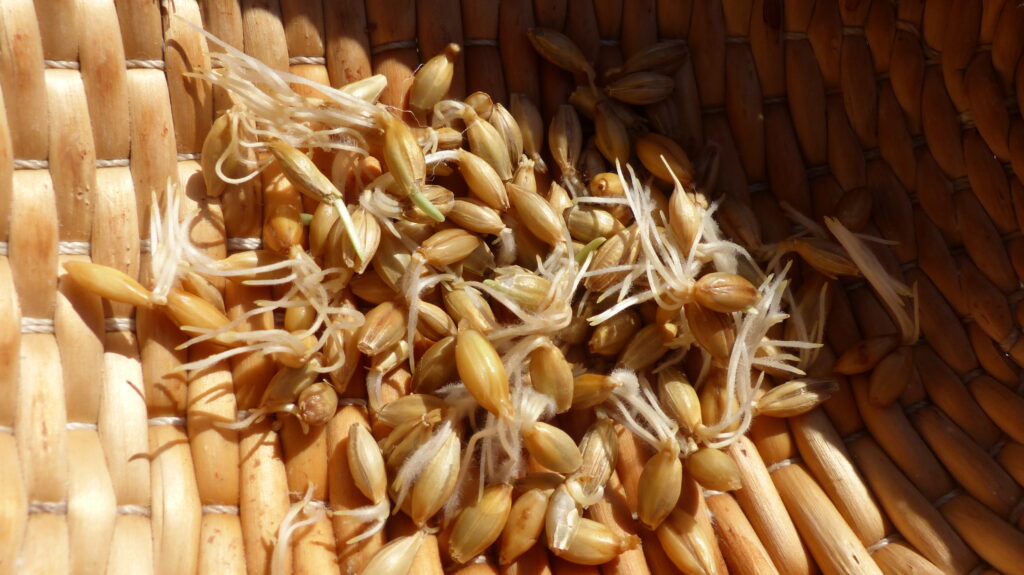
Image 2. Humidity-induced germination in barley grains. To produce malt, the basic ingredient in beer-brewing, grains are left to germinate for about 7 days and subsequently thermally processed to interrupt them from sprouting. Photograph by S.M. Valamoti, 2021.
In fact, modern Greece has a wealth of microbreweries to show, each contributing to the country’s culinary variety with quality products in a wide range of flavours and aromas. Islands such as Tinos, Santorini, and Evia in the Aegean and Corfu in the Ionian, not to mention regions of mainland Greece such as Macedonia, Thessaly, and the Peloponnese, each have their own array of beer varieties. While it has been associated with other regions of Europe and the Mediterranean, beer nevertheless has a long-standing tradition in Greece, most likely inspired in prehistoric times by the people of the Levant.