 Ελληνικά
 Deutsch
 Français
 Svenska
 Türkçe
 한국어
한국어 Suomi
Suomi






Soultana-Maria Valamoti, Professor, School of History and Archaeology, Aristotle University of Thessaloniki
Wheat and wine have been staples of Greek cuisine since time immemorial. A large variety of grains were cultivated in Greece from the 7th millennium B.C. onwards, as demonstrated by carbonised remains found at prehistoric sites throughout the country. Einkorn, emmer, and Timopheevii wheat, not to mention common and durum wheat, together with barley, formed the foundation of the Greek diet for millennia. Alongside these grains, grapes were systematically cultivated in vineyards; initially wild, they were domesticated over time. The archaeological record shows that from the 5th millennium B.C. onwards, enough grapes were grown in Northern Greece to enable the production of red wine; evidence of this includes a large quantity of grape seeds and marc found in a neolithic house destroyed by fire around 4300 B.C. Wheat and wine continued to be prominent in the Bronze Age; vital products, they appear frequently in the economic data of the Mycenaean palaces as recorded in the Linear B tablets.
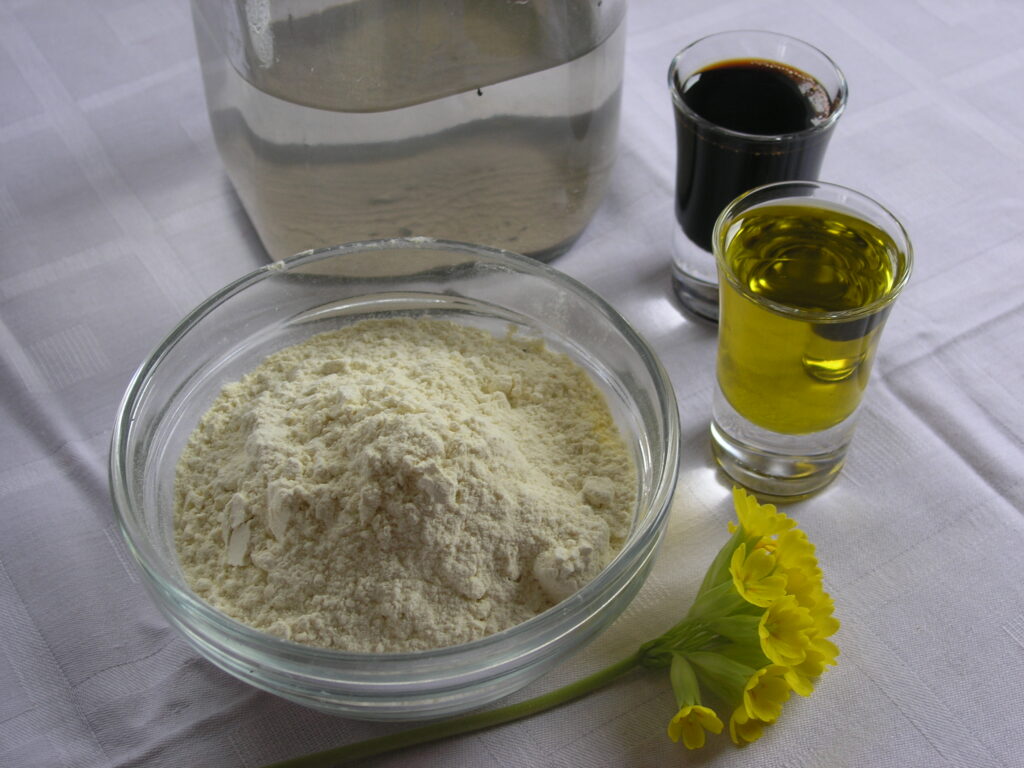
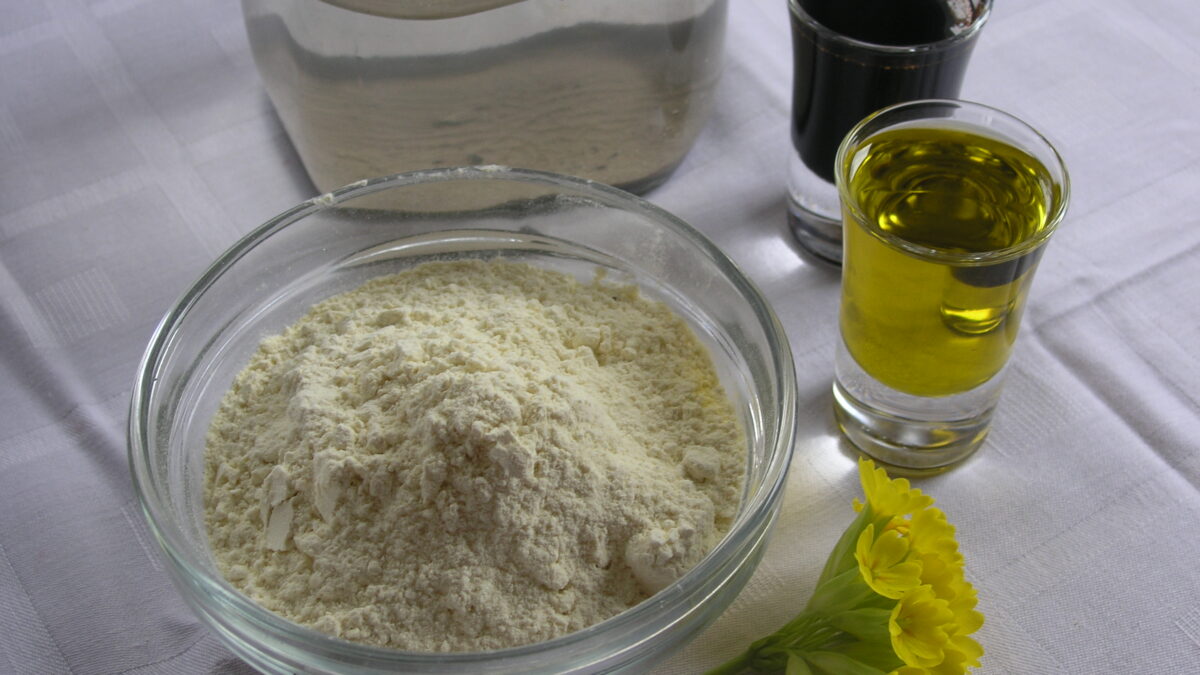
Image 1. Simple ingredients, tasty dishes: einkorn wheat flour, grape molasses, lye, and olive oil. Photograph by S.M. Valamoti, mountains of Chalkidiki, 2011.
In historical times, references to wheat and grapes abound in the ancient Greek writers, who describe numerous wheat-based recipes as well as grape-based products, such as wine, vinegar, and molasses. Wine and grains are mentioned as early as Homer’s Iliad, in the 8th century B.C., as dietary staples that confer strength and courage. These two basic foodstuffs also appear together in a passage from Archilochus (7th c. B.C.), who describes warriors taking bread and wine into battle. Ancient Greek literature exhibits a truly dizzying variety of recipes based on grains and grapes, perhaps most fascinating of which is a combination of the two known as oinoutta. It is found in Plutus by Aristophanes (5th-4th c. B.C.) and has been interpreted as a sweet based on flour, wine, and olive oil. Later on, Athenaeus (2nd-3rd c. B.C.) describes a similar confection from Crete, which he names glykinas, in his Deipnosophistae.
While details on how this recipe was prepared are scarce, the combination of ingredients is reminiscent of traditional cookies or cakes which call for flour and wine, such as the “methysmena” cookies or wine cookies made throughout mainland and maritime Greece. In the modern day, these confections are usually sweetened with sugar, but the ancient Greeks likely would have used grape must or honey instead.