 Ελληνικά
 Deutsch
 Français
 Svenska
 Türkçe
 한국어
한국어 Suomi
Suomi






Soultana Maria Valamoti, Professor, School of History and Archaeology, Aristotle University of Thessaloniki
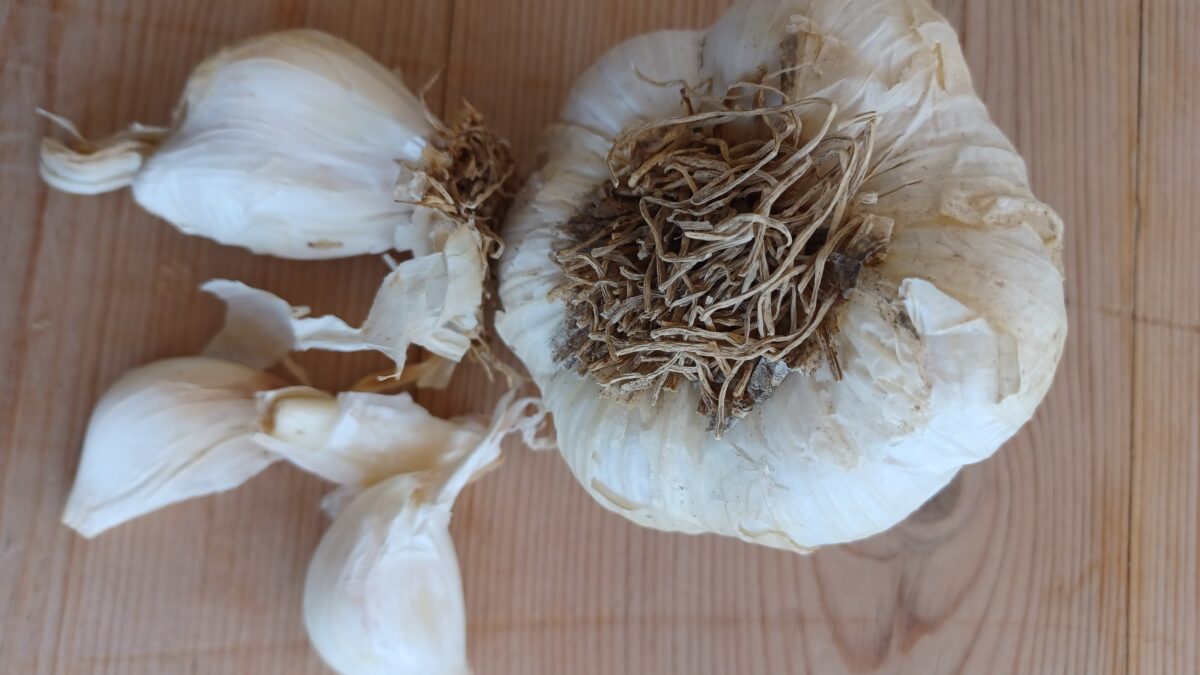
Garlic has been used in and around the Mediterranean since antiquity, though direct archaeological remains, such as cloves or heads of garlic, are quite rare given how unlikely they are to be preserved over time. Despite the difficulties in finding and identifying it, remains of garlic have been uncovered in digs dating from the prehistoric period and specifically the Bronze Age. Archaeological excavations at Tsougkiza, a prehistoric settlement near Nemea, uncovered 21 carbonised garlic cloves dated to about 1500 B.C., in the Late Bronze Age. Three garlic cloves discovered in a vessel in Akrotiri, Santorini, date to slightly earlier. Carbonised garlic has also been found in 4th-century B.C. burials on Thasos, potentially as tomb offerings as they were believed to ward off danger.
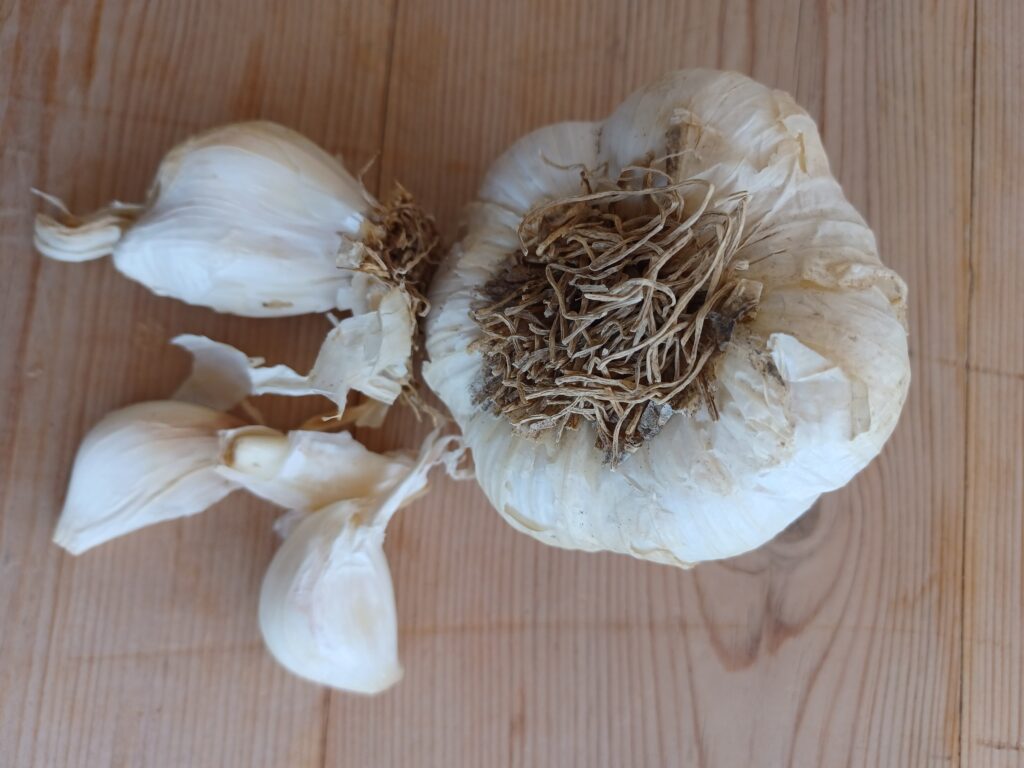
Image 1. Head and cloves of garlic, market of Kalamata, August 2025. Photograph by S.M. Valamoti.
Linguistic analysis indicates that garlic was introduced to Greece from the East. The ancient Greek terms for garlic, “skordon” and, more frequently, “skorodon”, are essentially identical to the modern Greek term. These two words are encountered in historical texts from the 5th c. B.C. onwards. However, concurrently with these, the words aglis and gelgis, which mean “head of garlic” and “cloves of garlic” respectively, also saw use. These words are considered to be of Akkadian provenance and constitute vestiges of ancient terms from a linguistic substratum of ancient Greek that has yet to be identified. Akkadian was the lingua franca of administration and international relations in the Near East from 1500 to 500 B.C., thus lending further credence to the theory that the words aglis and gelgis were introduced to Greece and the wider Aegean from the east. Based on archaeobotanical data, we may assume that garlic was first introduced to Greece no later than the 2nd millennium B.C. through the network of contacts and commercial exchanges that connected Greece and the Aegean with the civilizations of the Eastern Mediterranean, Asia Minor, and the Middle East during the Bronze Age, especially the Mycenaean period.
There is truly no shortage of references to garlic in ancient Greek literature. The word for garlic is encountered in the 5th century in a passage from Sophocles, while Herodotus also mentions it frequently. References to garlic may also be found in the technical treatises that provide information on its attributes and cultivation, such as the Enquiry into plants and On the causes of plants by Theophrastus (4th-3rd c. B.C.). Apart from these references, garlic was a favourite of old comedy, especially the works of Aristophanes (5th-4th c. B.C.). These mentions of garlic in comic poetry demonstrate its status as a common and beloved foodstuff, accessible even to the lower social strata. Garlic also figures prominently in the medical texts of antiquity, frequently described as either ideal for the treatment of certain ailments or detrimental to the treatment of others; notable examples include the Hippocratic corpus (5th-4th c. B.C.), the De materia medica of Dioscorides (1st c. A.D.), and the works of Galen (2nd c. A.D.).
In the modern day, garlic continues to be cultivated throughout Greece, with local agri-food entrepreneurs producing and promoting regional varieties, such as Vyssa or Thracian garlic, Platykampos garlic from Thessaly, garlic from Tripoli etc. Garlic also figures prominently in numerous recipes and is the protagonist in skordalia, a delicacy enjoyed throughout Greece.