 Ελληνικά
 Deutsch
 Français
 Svenska
 Türkçe
 한국어
한국어 Suomi
Suomi






Soultana-Maria Valamoti, Professor, School of History and Archaeology, Aristotle University of Thessaloniki
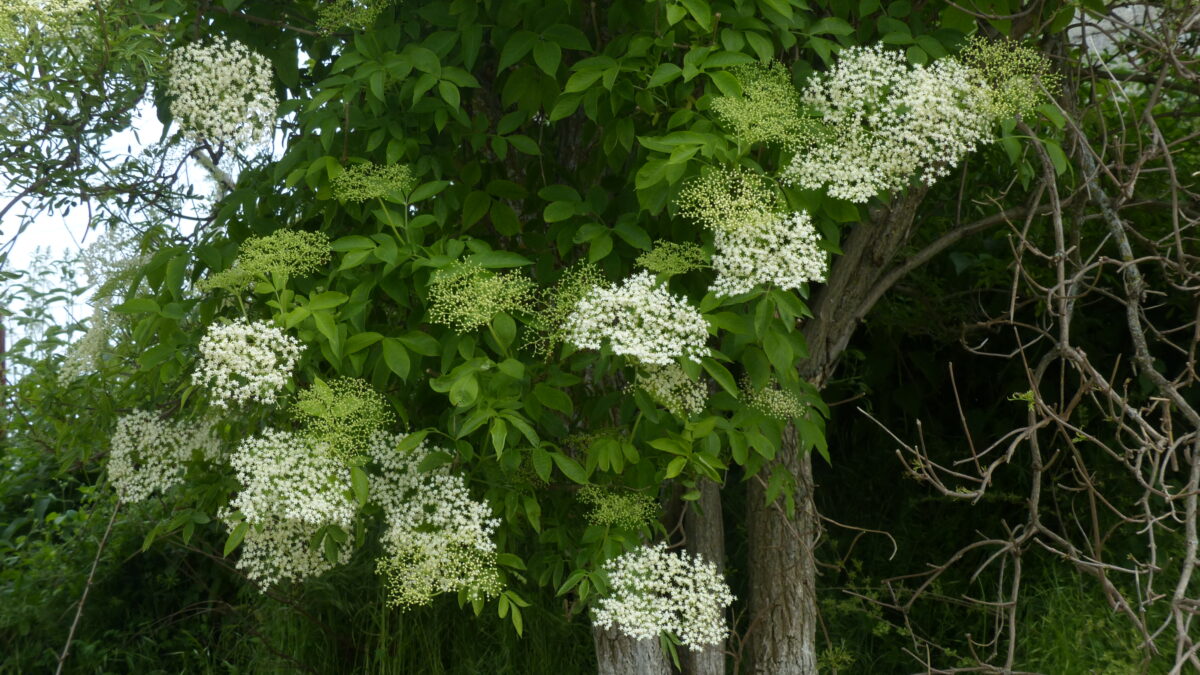
The small, dark fruit of the elderberry tree is used to make marmalades, while cultures from the Balkans right up to Scandinavia use its blossoms as an ingredient in a fragrant syrup. The Greek term koufoksylia, meaning hollow wood, is indicative of folk beliefs held throughout Europe, according to which spirits dwell within its hollowed branches. Archaeobotanical remains of the fruit dating to the Neolithic period have been uncovered in Greece, though these are usually few and relatively rare. Nevertheless, a large quantity of elderberry seeds has been uncovered at the neolithic site of Kleito, in Kozani prefecture.
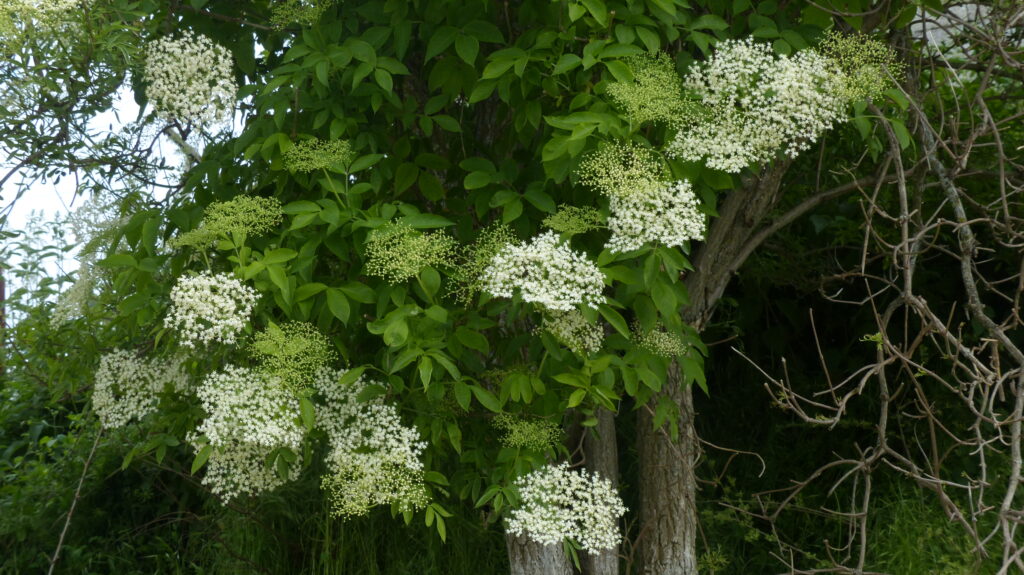
Image 1. Elderberry tree in bloom, mountains of Central Macedonia, May 2022. Photograph by S.M. Valamoti
There are relatively few references to the plant in ancient Greek literature, found almost exclusively in medical texts. Theophrastus (4th-3rd c B.C.) provides some information on the plant’s botanological attributes. The ancient Greek term for elderberry is akti (and aktea), while a later, anonymous medical text that only survives in fragments preserves the word koufoksylaia as a modifier for the term akti. References to the plant in ancient Greek literature are usually accompanied by the medicinal qualities of its various parts and pharmaceutical formulas for specific ailments. The Hippocratic corpus (5th-4th c. B.C.) contains several references to elderberry as an ingredient in remedies. For example, in On diseases, if one is suffering from persistent headache, phlegm, and fever, three different remedies are suggested, the third and most potent of which is juice of elderberry leaf. In On diet, elderberry juice (though it remains unspecified from which part) is considered a powerful, effective laxative. Dioscorides (1st c. A.D.) makes the distinction in his De materia medica between elderberry (akti) and chamosampouko (chamaiakti), providing detailed descriptions of the two plants and listing the medicinal properties and uses of both, which he considers to be largely similar. Dioscorides states that the tree’s fruit are detrimental for the gut (kakostomachoi), while its leaves and young shoots are believed to aid in cleansing the gallbladder and phlegm when boiled and its roots, if boiled in wine, are used to treat viper bites. Among its various medicinal qualities, Dioscorides notes that bathing in water in which elderberry root has been boiled aids in uterine ailments, as does the consumption of elderberries with wine. Finally, he describes a poultice made of ground barley and young elderberry shoots, which is applied to burns and dog bites.
Image 2. Elderberry marmalade, purchased in Thessaloniki, September 2025, product of Pelion, Magnesia. Photograph by S.M. Valamoti
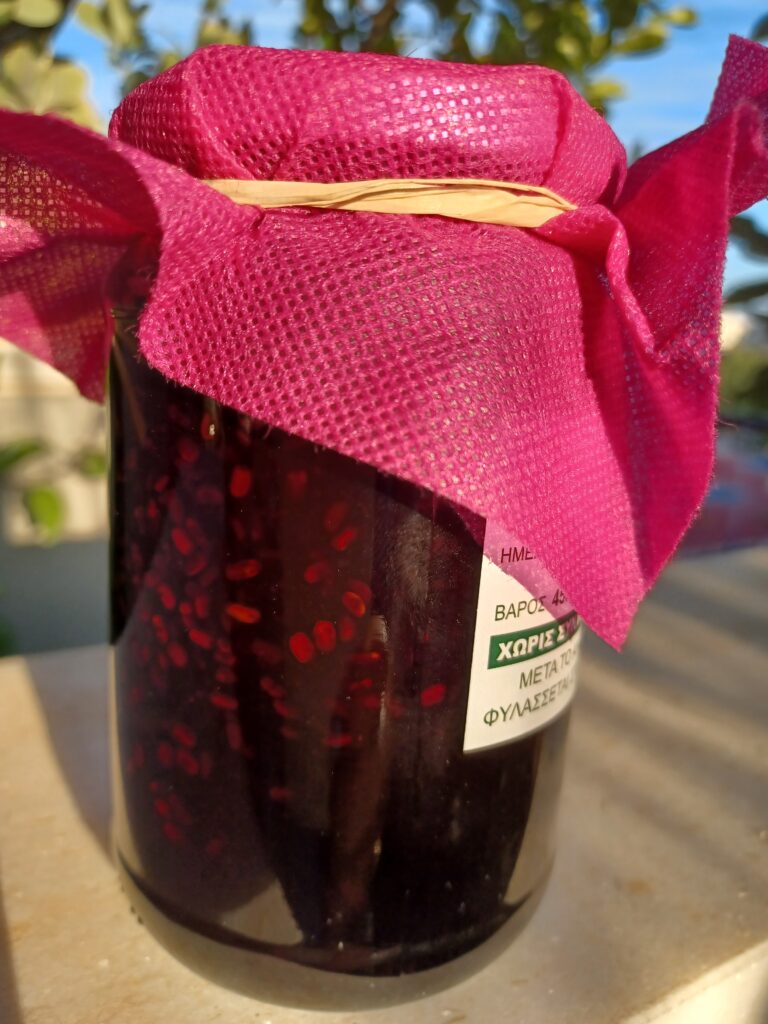
Indigenous to Greece, elderberry continues to see limited culinary use in the modern day. Elderberry marmalades are available, their striking, deep red colour on full display, in small local shops. Due to how arduous and time-consuming harvesting the fruit is, production tends to be limited in scale. Marmalades made with this rare delicacy of the Greek countryside, which has been enjoyed since pre-historic times, may be purchased from agricultural cooperatives or small shops that stock local products, such as in Pelion, or in Kalampaka, Thessaly.
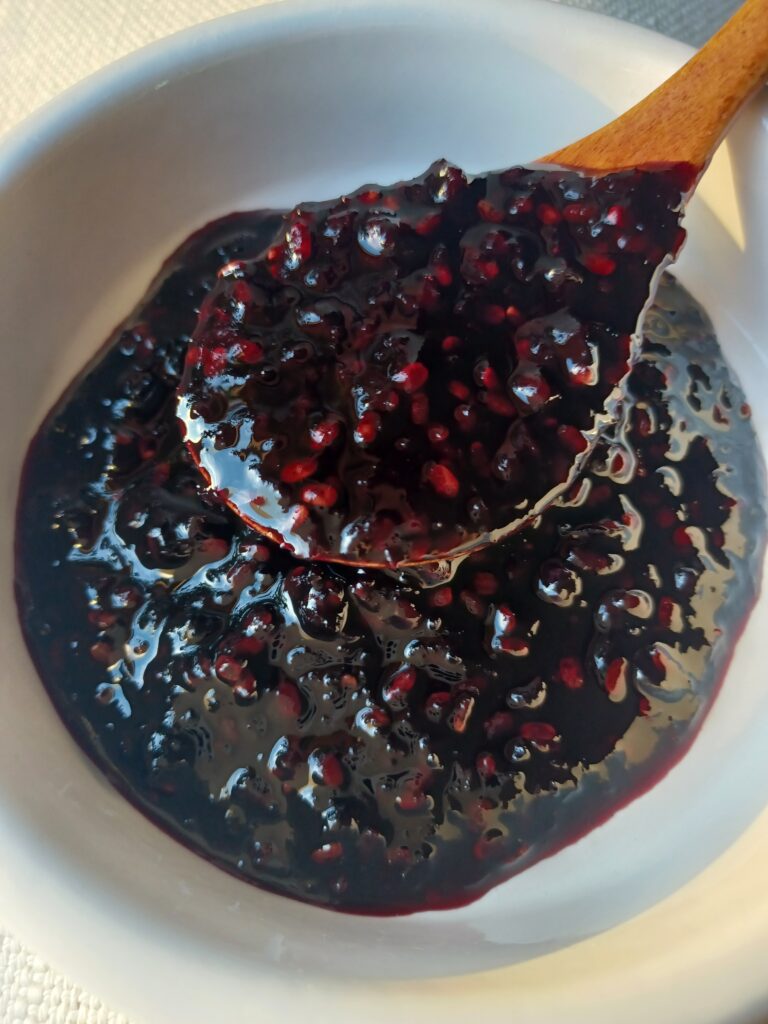
Image 3. Elderberry marmalade, purchased in Thessaloniki, September 2025, product of Pelion, Magnesia. Photograph by S.M. Valamoti